
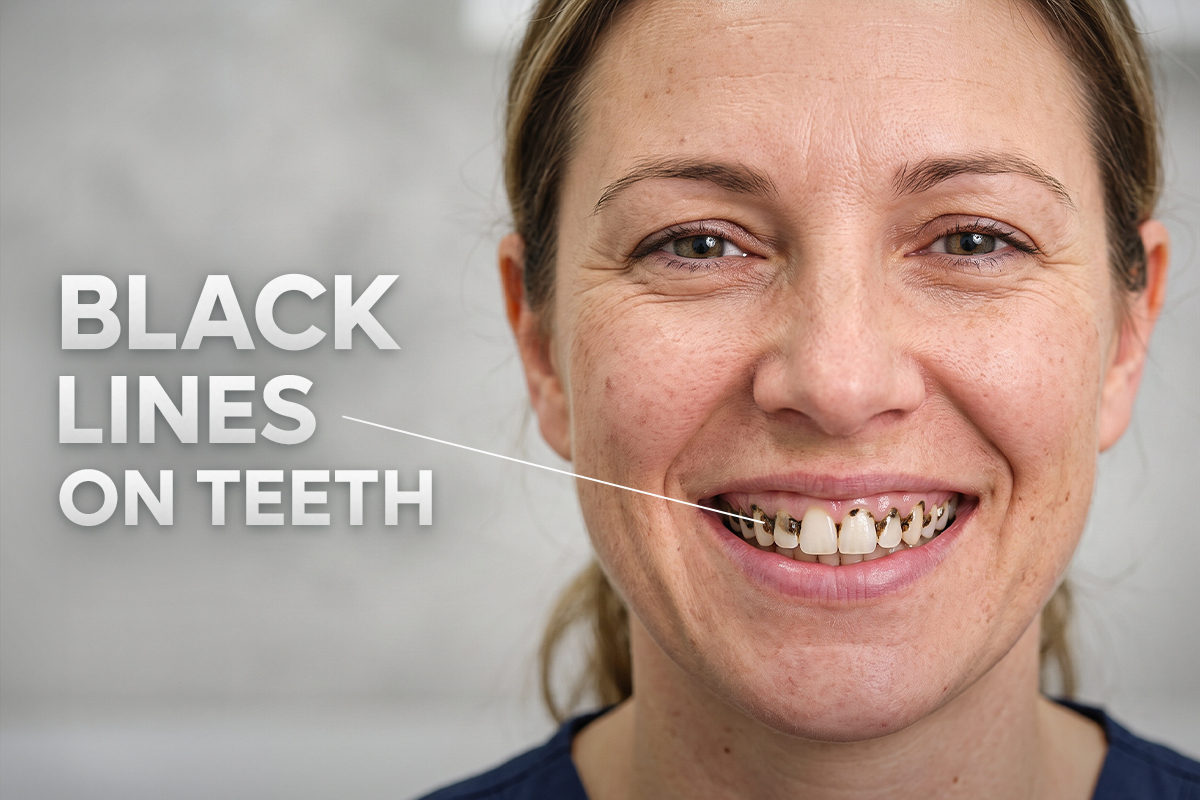
You notice a dark line on a tooth in the mirror, and the first thought is usually a cavity. Often it is not. A large share of these marks sit on the surface and never touch the structure of the tooth.
The line might be a faint vertical streak, a dark band tracing the gumline, or a shadow in the grooves of a molar. Each has a different cause and a different fix. This guide explains what produces black lines on teeth, how to separate a harmless stain from active decay, and which treatments actually work.
What Are Black Lines On Teeth?
To understand what a black line is, it helps to understand the anatomy of a tooth. Your teeth are covered in enamel, the hardest substance in the human body. However, on a microscopic level, enamel is porous. It features tiny ridges, pits, and fissures where bacteria and pigments can become trapped.
When a black line appears, dentists typically categorize it into one of two primary types based on its location and origin:
- Extrinsic Black Lines: These sit purely on the surface of the enamel. They are external. They form when foreign materials—such as plaque, tartar, bacterial byproducts, or heavily pigmented foods—accumulate and adhere to the outside of the tooth. Because they are on the surface, they do not compromise the structural integrity of the tooth itself.
- Intrinsic Black Lines: These develop beneath the surface of the enamel or represent an actual physical defect in the tooth structure. Intrinsic lines can be caused by active decay eating away at the enamel, old restorative materials leaking into the tooth, or a physical micro-fracture that has absorbed deep stains. Telling the two apart is crucial, as intrinsic lines require active medical treatment, whereas extrinsic lines are primarily a cosmetic and hygiene concern.
Common Causes Of Black Lines On Teeth
Several distinct issues can produce a black line, and they certainly do not all carry the same level of concern. Below are the most frequent culprits behind these dark marks.
1. Tartar (Calculus) Buildup
Your mouth is a bustling ecosystem of bacteria. When these bacteria mix with proteins and food byproducts, they form a sticky, colorless film called plaque. If plaque is not thoroughly removed through daily brushing and flossing, the minerals naturally present in your saliva cause it to calcify and harden. This hardened substance is called tartar, or calculus.
Tartar is highly porous, meaning it acts like a sponge for pigments. Over time, tartar buildup absorbs colors from everything you eat and drink, gradually turning yellow, brown, and eventually black. This typically forms a solid black line along the gumline or on the back of the lower front teeth. Once tartar forms, no amount of aggressive at-home brushing will remove it; it requires professional dental scaling. Left untreated, tartar irritates the gums and is the primary driver of gingivitis and periodontal disease.
2. Staining From Diet and Lifestyle Habits
Your daily habits leave a mark on your smile. Certain foods and beverages contain intense color compounds known as chromogens, as well as tannins, which make it easier for stains to stick to the enamel.
Coffee, black tea, red wine, dark sodas, and soy sauce are notorious for causing surface staining. Furthermore, smoking and the use of chewing tobacco introduce tar and nicotine into the mouth. While nicotine is colorless, it turns yellowish-brown when exposed to oxygen. Over months and years, these stains settle into the natural micro-grooves of your teeth, often concentrating into visible dark or black lines, particularly in the deep fissures of your molars.
3. Chromogenic Bacterial Pigmentation (Black Stain)
One of the most misunderstood causes of black lines on teeth that aren’t cavities is bacterial pigmentation, often referred to in dentistry simply as “black stain.” Specific pigment-producing bacteria drive it, most often Actinomyces species, with Prevotella melaninogenica also present. These bacteria release hydrogen sulfide. That compound reacts with iron in your saliva and gingival fluid to form ferric sulfide, a dark, insoluble deposit. The result is a thin line of dark dots along the cervical third of the tooth, following the gum contour.
Two points matter here. Black stain appears in roughly 2.4% to 20% of people, affects both sexes equally, and shows up most often in children, though it can occur at any age. It also appears in mouths with excellent hygiene, so it is not a sign of neglect.
The link with decay is the interesting part. A 2025 systematic review and meta-analysis found that 12 of 14 studies reported an inverse association between black stain and caries, with children who had the stain showing roughly half the odds of cavities. Researchers attribute this to a biofilm dominated by less acid-producing bacteria than Streptococcus mutans, alongside higher salivary buffering capacity. The authors flag substantial variation between studies, so treat this as a consistent pattern rather than proven protection.
Black stain is clinically harmless. It also bonds tightly, so removing it requires professional polishing.
4. Tooth Decay (Cavities)
Of course, not all black lines are harmless stains. A developing cavity frequently presents as a dark spot or a black line. This is most common in the occlusal surfaces of the molars, where deep, narrow grooves make it easy for plaque to hide and hard for toothbrush bristles to reach.
When bacteria digest sugars in your mouth, they produce acid. This acid leaches minerals out of the enamel. As the enamel weakens and breaks down, a tiny hole forms. This structural void traps food and bacteria, rapidly turning black or dark brown. A tooth decay black line on teeth is a progressive medical issue. Unlike a surface stain, it will slowly destroy the tooth from the inside out if left untreated.
5. Old Or Failing Dental Work
If you have a black line appearing around a tooth that has already been treated, your dental work may be showing its age.
Historically, silver amalgam fillings were heavily used in dentistry. Over the years, these metal fillings can slowly corrode and leak metallic particles into the surrounding tooth structure, creating a dark, grayish-black halo or line around the edge of the filling.
Similarly, if you have a Porcelain-Fused-to-Metal (PFM) crown, you may notice a black line along the gumline. As we age, our gums naturally recede slightly. When the gums pull back from a PFM crown, the underlying metal margin of the crown becomes exposed, presenting as a stark black or gray line.
6. Craze Lines and Micro-Fractures
Sometimes, a vertical black line on a tooth is actually a tiny crack. Craze lines are microscopic hairline fractures in the outer enamel caused by years of chewing, clenching, teeth grinding (bruxism), or biting on hard objects like ice. While craze lines themselves are usually shallow and don’t threaten the tooth’s safety, these microscopic cracks easily trap coffee, tea, and tobacco stains, transforming an invisible crack into a prominent black vertical line.
Are Black Lines On Teeth A Sign Of A Serious Problem?
The short answer is: not always. Many black lines are simply a cosmetic annoyance. If the line is caused by chromogenic bacteria, food staining, or a mild accumulation of tartar, your tooth is not in immediate danger of failing.
However, a black line becomes a serious warning sign if it is accompanied by specific symptoms. You should be concerned if:
- The black line is accompanied by sensitivity to hot, cold, or sugary foods.
- The area feels physically rough, sticky, or indented when you run your tongue or a dental explorer over it.
- You experience localized pain when biting down.
- The gums around the black line are red, swollen, or bleed easily when you brush.
Because the visual difference between an innocent stain trapped in a groove and an active, tissue-destroying cavity is nearly impossible to determine with the naked eye in a bathroom mirror, a professional dental examination is the only reliable way to know what you are dealing with.
How To Prevent Black Lines On Teeth
Prevention is heavily dependent on impeccable oral hygiene and being mindful of your diet. While you cannot always prevent chromogenic bacteria, you can drastically reduce tartar, staining, and decay by following these protocols:
- Master Your Daily Routine: Brush twice daily for a full two minutes using a fluoride toothpaste. Fluoride remineralizes the enamel, making it more resistant to acid attacks. Flossing once a day is non-negotiable for preventing black lines between the teeth, where brush bristles cannot reach.
- Upgrade Your Tools: Consider switching to an electric toothbrush. The sonic vibrations and oscillating heads are vastly superior at breaking up plaque biofilms before they can harden into tartar.
- Manage Your Diet: Limit your intake of highly pigmented, acidic, and sugary foods. If you do consume coffee, tea, or red wine, try drinking a glass of water immediately afterward to flush away the chromogens and neutralize mouth acids.
- Quit Smoking: Eliminating tobacco use is one of the most effective ways to prevent heavy, tar-based black lines from forming on your teeth.
- Wear a Night Guard: If you grind your teeth at night, a custom-fitted night guard will prevent the formation of craze lines and micro-fractures that inevitably collect dark stains.
Treatment Options For Black Lines On Teeth
The treatment for a black line depends entirely on its root cause. This is why an accurate clinical diagnosis is paramount.
For Tartar and Stains:
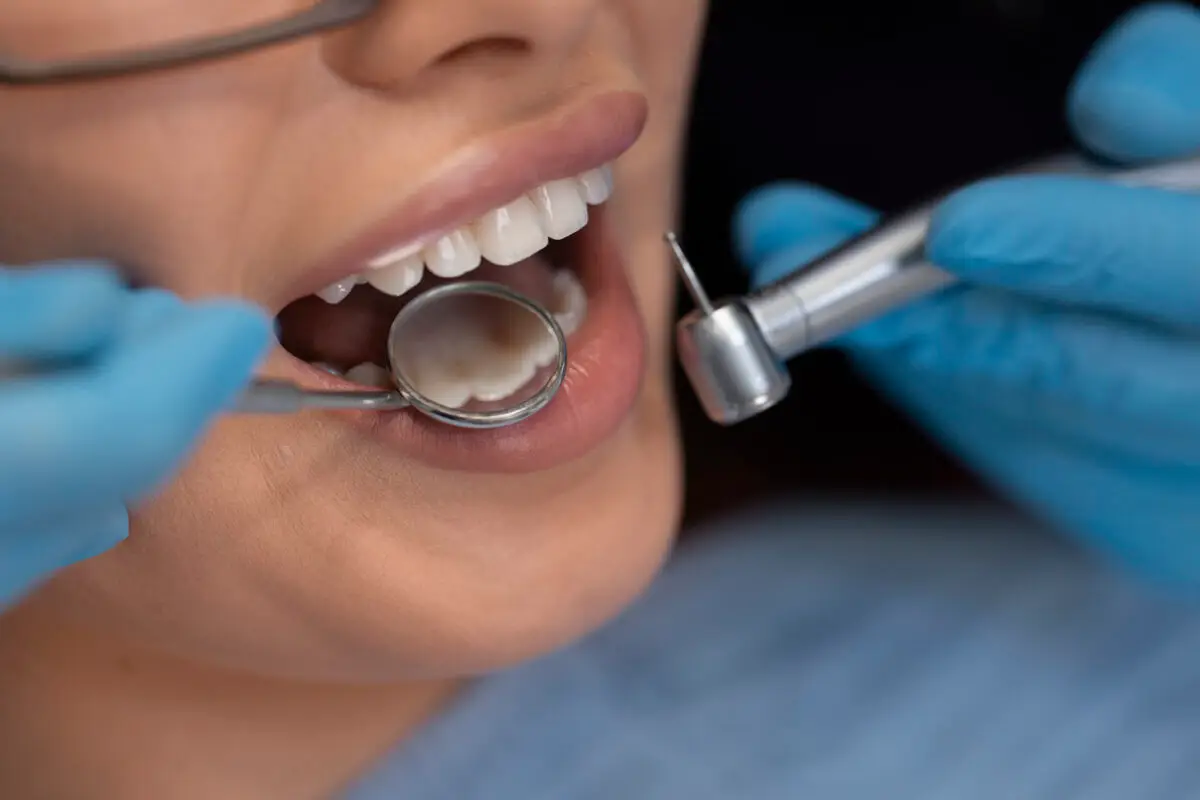
Extrinsic black lines respond beautifully to a professional dental cleaning. A dental hygienist will use ultrasonic scalers and specialized hand instruments to gently vibrate and scrape the calcified tartar away from the enamel without damaging the tooth.
Once the buildup is removed, a professional polishing using a slightly abrasive prophy paste will buff away residual surface stains. If you desire an even brighter result after the lines are removed, professional teeth whitening can penetrate the enamel to lift deeper, older discoloration. It is crucial to note that whitening gels will not work on tartar; the teeth must be professionally cleaned first.
For Chromogenic Bacteria (Black Stain):
This also requires a professional cleaning. Dentists often use an air-polishing device (which sprays a pressurized mix of water, air, and fine powder like sodium bicarbonate) to effectively blast away the stubborn bacterial lines.
For Tooth Decay:
If the black line is an active cavity, the decayed portion of the tooth must be physically removed by the dentist using a drill or laser. Once the diseased tissue is cleared, the void is filled with a tooth-colored composite resin, instantly restoring the tooth’s health and natural appearance.
For Old Dental Work:
If a leaking amalgam filling or an exposed crown margin is the issue, the dentist will recommend removing the old restoration. It can be replaced with modern, metal-free alternatives, such as composite fillings, zirconia crowns, or all-ceramic E-max crowns, completely eliminating the dark metal aesthetics.
When Should You See A Dentist For Black Lines?
While a tiny black speck might not necessitate an emergency, a new or growing black line should prompt a dental visit. You should schedule an appointment immediately if the black line is painful, if the tooth feels structurally compromised, or if the black line is located right at the gumline and accompanied by bleeding gums (a strong indicator of advancing gum disease).
Even if the line looks purely cosmetic, waiting years between dental visits allows minor, easily treatable issues to evolve into complex, expensive problems. Routine check-ups every six months allow your dentist to catch and remove plaque and early decay before they ever have the chance to turn into a menacing black line.
Can Black Lines Reappear After Treatment?
Unfortunately, yes. If the underlying cause is not addressed, the lines will return.
Chromogenic bacterial pigmentation is particularly notorious for this. Because the specific bacteria live in the mouth’s flora, they tend to recolonize the teeth within a few months of a cleaning. Children who suffer from black stain often require more frequent dental cleanings (every 3 to 4 months) until they outgrow the condition, which typically happens as their adult teeth come in and their salivary composition changes during puberty.
Tartar will also reform rapidly if brushing and flossing habits do not improve post-treatment. Staining from coffee, tea, and smoking will continuously reappear as long as the lifestyle habits persist.
Conversely, decay-related black lines that have been properly drilled and filled generally do not return in the exact same spot, provided the restoration is well-maintained and no new decay forms around the edges of the filling.
Frequently Asked Questions
What are black lines on teeth and what do they mean?
They are dark streaks or bands that appear on or within a tooth. They most commonly indicate calcified tartar buildup, heavy food and beverage staining, bacterial pigmentation, active tooth decay, or the deterioration of older metal-based dental work. The specific meaning depends on a clinical diagnosis.
Do black lines on teeth always mean I have a cavity?
No. A large percentage of black lines are strictly surface-level (extrinsic), caused by tartar, stains, or chromogenic bacteria rather than decay. However, a cavity is highly likely if the black line is accompanied by sensitivity, pain, or a physically rough, indented texture.
Can I remove black lines on my teeth at home?
Generally, no. If the line is made of tartar or bacterial pigmentation, it is too hardened and firmly bonded to the enamel to be removed with a standard toothbrush or at-home whitening strips. Attempting to aggressively scrape it off at home with sharp tools can severely damage your enamel and gums. Professional cleaning is required.
How often should I see a dentist if I have black lines on my teeth?
A routine check-up and professional cleaning every six months is sufficient for most individuals. However, if a black line is new, actively growing, or causing pain, do not wait for your bi-annual visit; schedule an appointment promptly to rule out an active infection or cavity.
Can black lines reappear even after professional treatment?
Yes, particularly those caused by lifestyle habits (like smoking and drinking coffee) and bacterial pigmentation. Both can rebuild over time. Decay-related lines do not return once properly treated, assuming excellent oral hygiene is maintained around the new dental filling.
References
- Aspen Dental, “Dark Line at the Base of Your Tooth?”
- Walbridge Dental, “Why Is There a Black Line on My Tooth?”
- Al-Shareef et al., “Current perspective on dental black stain of bacterial origin: A narrative review,” European Journal of Oral Sciences, 2025
- “Association Between Chromogenic Black Stain and Dental Caries in Children: A Systematic Review and Meta-Analysis,” Children, 2025